Safe farms, safe food
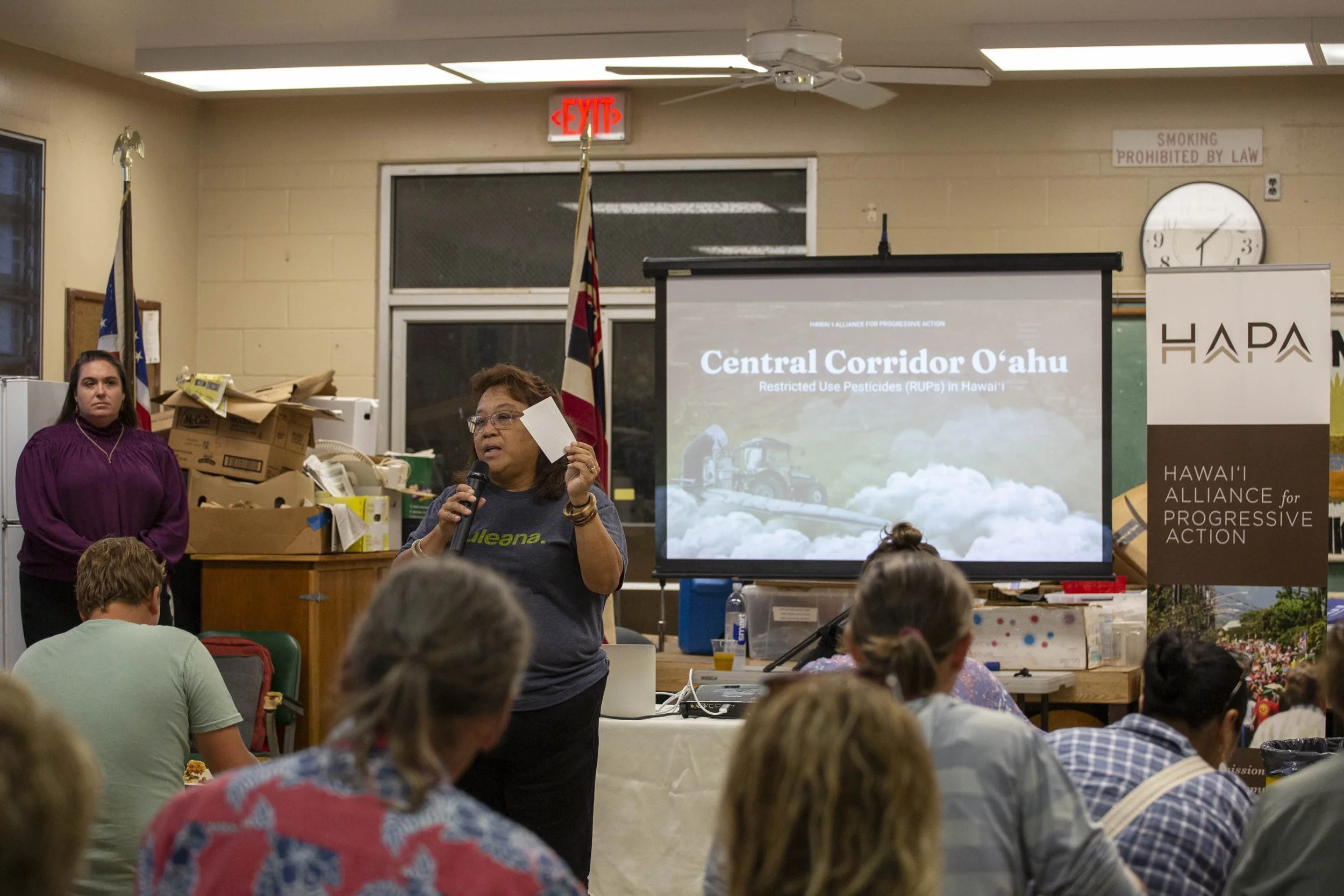
For many years, residents raised concerns about pesticide drift, contamination of water resources, and exposure risks near homes, schools, and shoreline areas. Until recently, there was limited information available to the public about where pesticides were being used and in what amounts. In response to community advocacy and state level policy changes, certified applicators are now required to report the location, quantity, and type of RUPs applied. This microsite provides community-friendly access to data on Restricted Use Pesticide, or RUP, applications across Hawaiʻi.
-
Counties Take Action
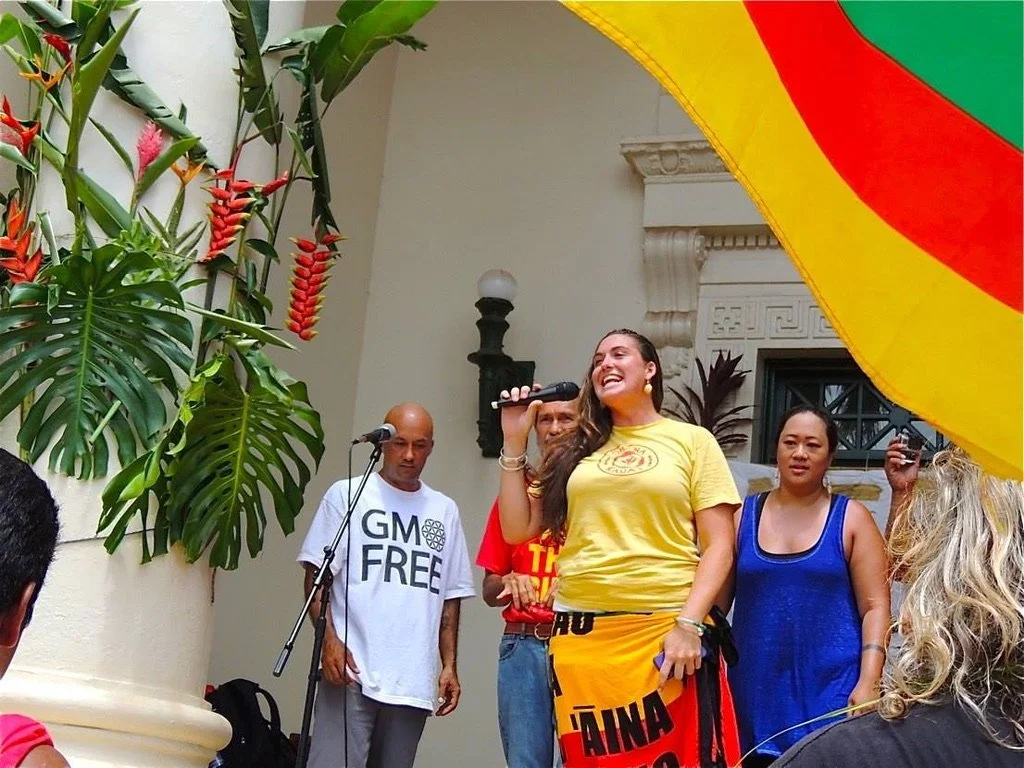
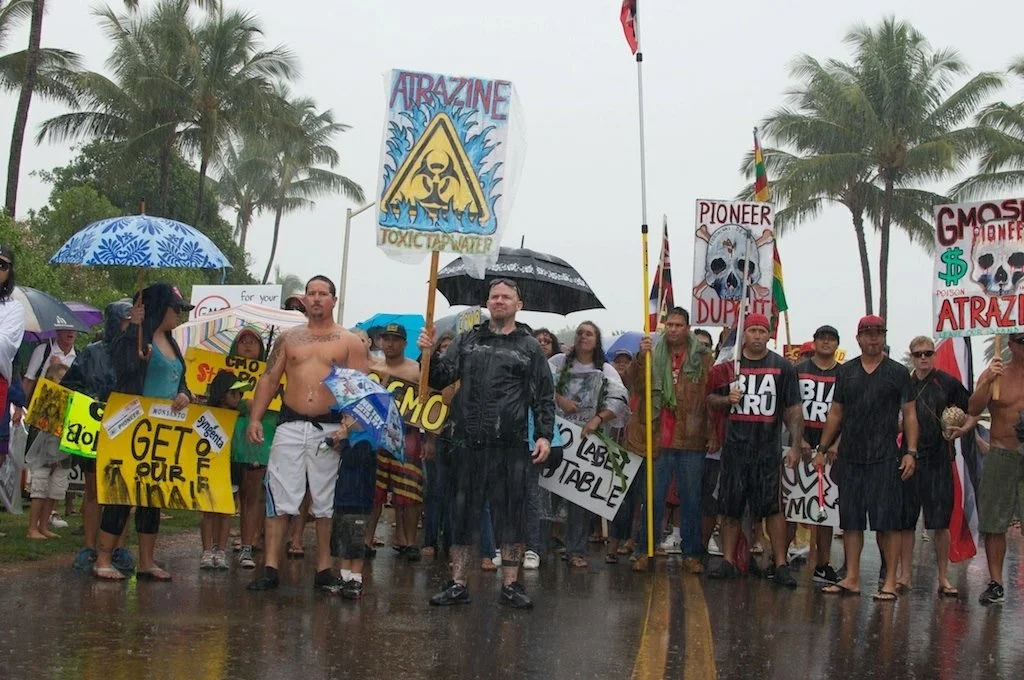
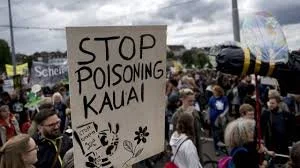
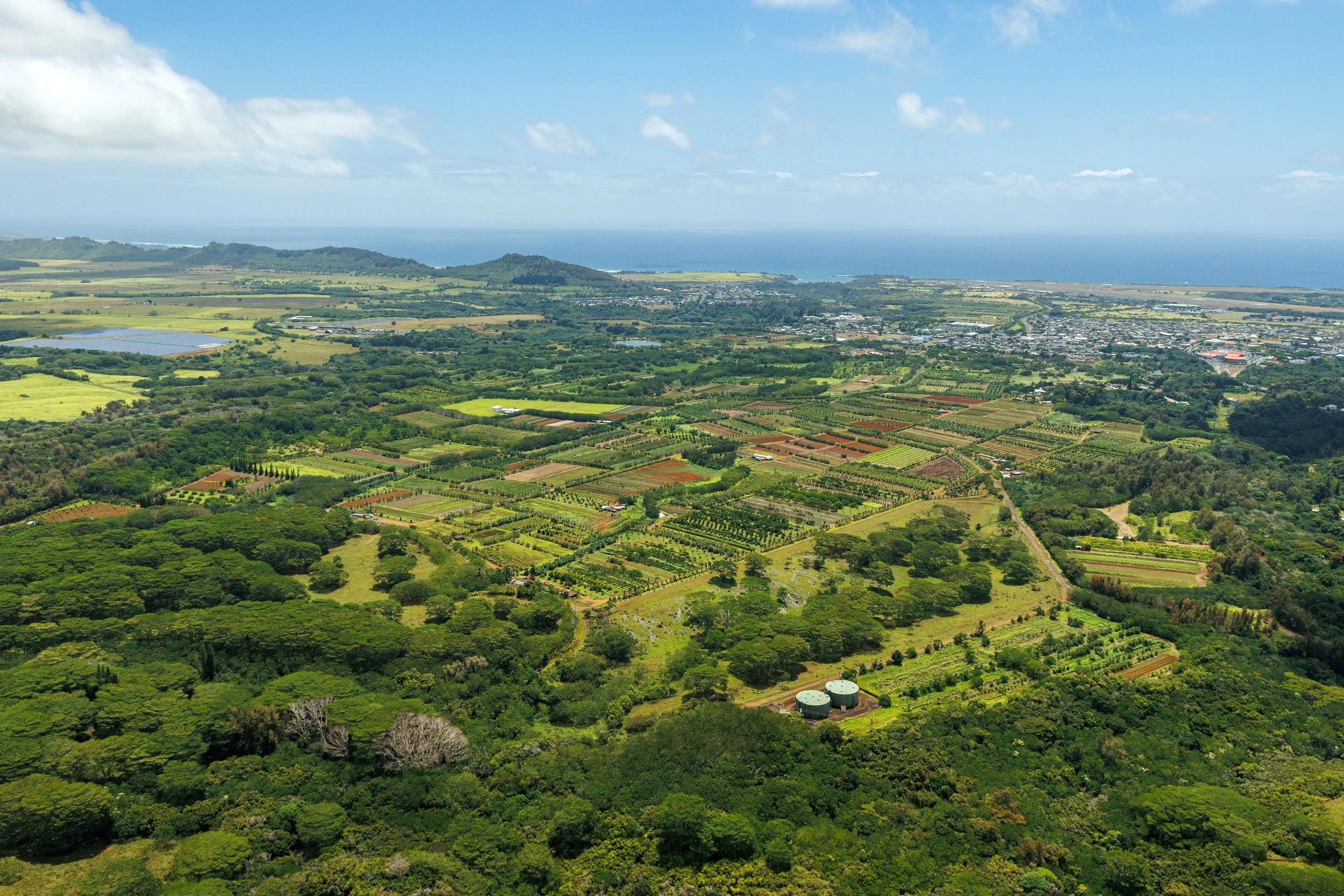
In the early 2010s, Hawai‘i sat at the center of a growing national and local movement resisting the unregulated use of hazardous agricultural chemicals and genetically engineered (GE) seed operations on its islands. At the time the Hawaiian Islands were ground zero for experimental field trials of GE crops and their companion pesticides. Agrochemical fields directly abutted schools, Hawaiian Homesteads, waterways and entire residential areas. Grassroots organizing, driven by residents alarmed about pesticide drift, health impacts, and lack of transparency, culminated in a wave of county-level activism aimed at regulating chemical use where it mattered most, in communities adjacent to fields sprayed with powerful restricted use pesticides (RUPs). On Kaua‘i in 2013, after extensive public testimony, marches, and years of community pressure, the County Council passed a groundbreaking ordinance requiring major pesticide users to disclose chemical types, quantities, and application locations, and to establish buffer zones to shield schools, homes, and sensitive areas from drift. Similar ordinances followed in Maui and Hawai‘i Counties, reflecting widespread public support for local control over pesticide impacts.
Chemical Corporations Sue the Counties
However, the victories at the council chambers were met with fierce legal opposition from multinational chemical and seed companies. These corporations, including Syngenta, Dow Chemical Company, DuPont Pioneer, BASF, and Monsanto, challenged the county laws in federal court, arguing that local governments lacked authority to regulate pesticides and associated agricultural practices. In 2014 and 2016, federal courts agreed, first striking down Kaua‘i’s law as preempted by state law, and then, in November 2016, the U.S. Court of Appeals for the Ninth Circuit upheld rulings that the pesticide and GE crop regulations enacted by Kaua‘i, Maui, and Hawai‘i counties were preempted by both Hawai‘i’s state regulatory framework and, in some cases, federal law. This legal doctrine of preemption (where state law is found to occupy the field and thus block local regulation) effectively nullified the counties’ efforts to protect their own residents from pesticide harms.
A Setback for Community Accountability and Justice
The Ninth Circuit’s decisions marked a significant setback for local environmental and public health advocates. By holding that county ordinances were preempted because the state Legislature had established a uniform statutory scheme governing pesticides and agriculture, the court left communities without the very protections they had democratically enacted and fought to defend. Across the islands, ordinances once hailed as bold experiments in environmental democracy were rendered unenforceable. Activists and residents quickly recognized that local efforts, however passionately backed by voters and health professionals, could not withstand preemption without change at a higher level of governance.
Hard Won Protections: The Hawaii Legislature Passes Act 45
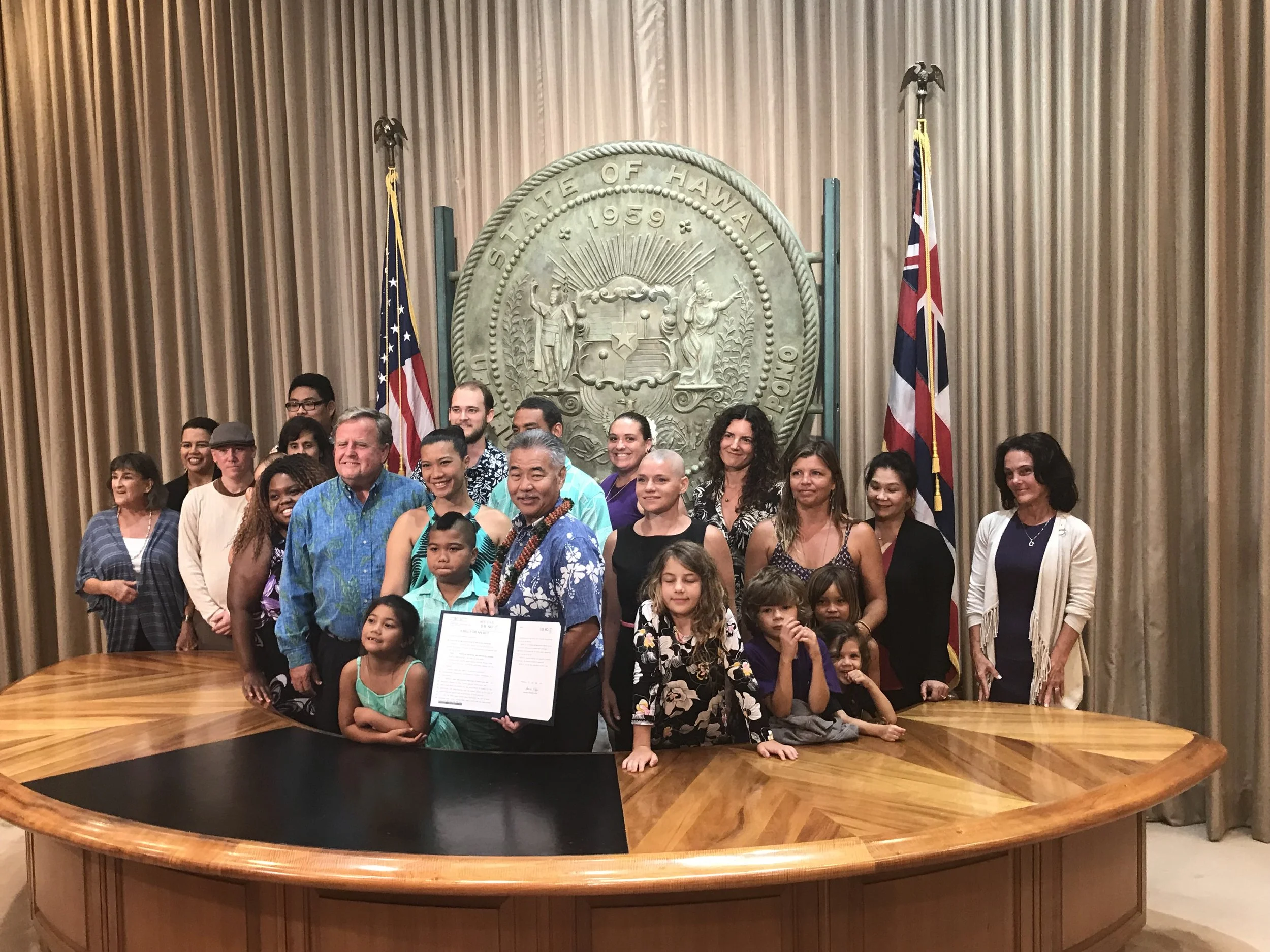
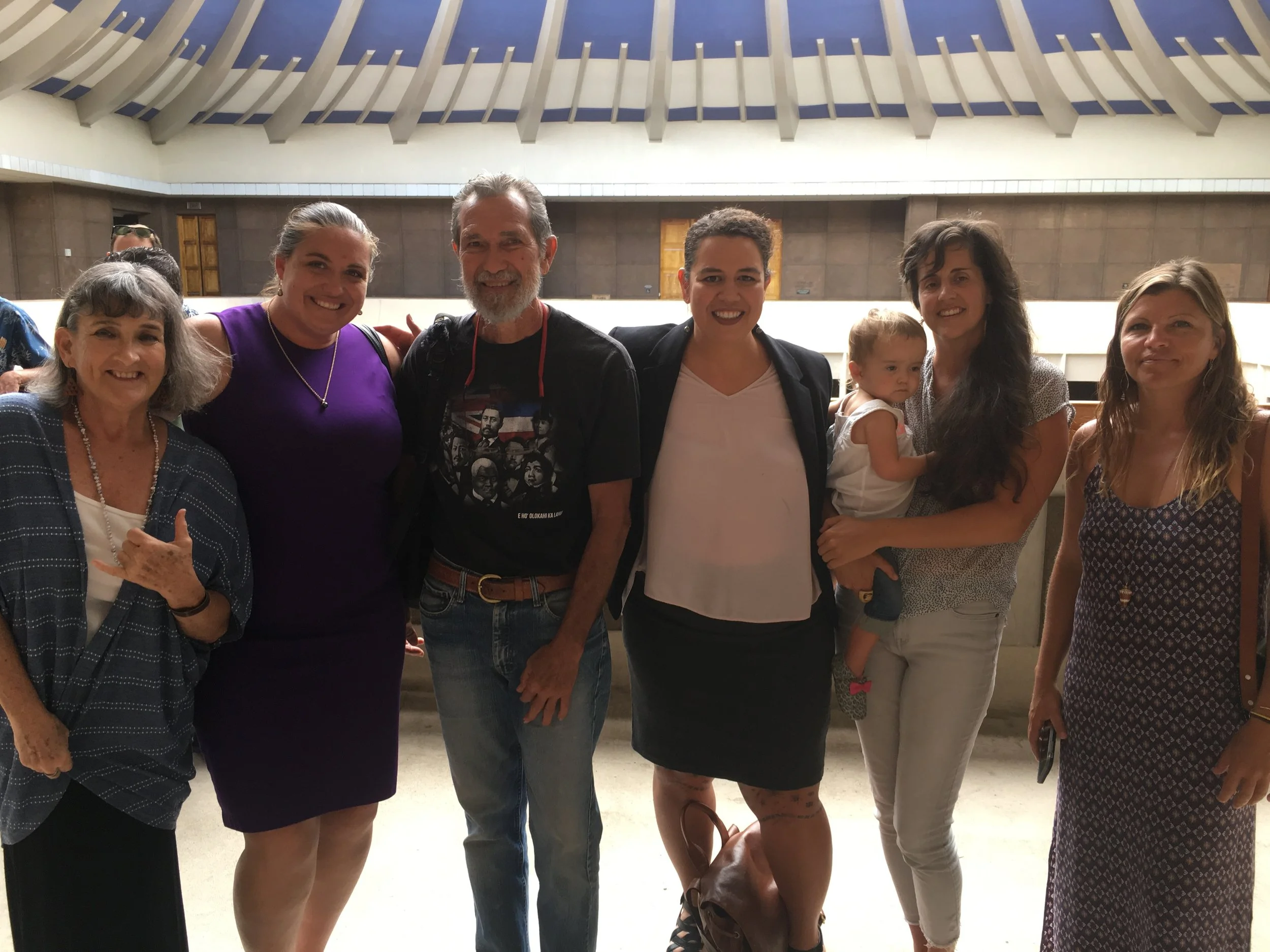
Spurred by these defeats but not deterred, community coalitions reoriented their strategy toward the Hawai‘i State Legislature. Beginning in 2015, advocates (including grassroots organizations, health and environmental justice groups, and legal allies) repeatedly introduced statewide legislation aimed at achieving what county ordinances sought: no-spray buffer zones, mandatory disclosure of pesticide applications, and stronger oversight of restricted use pesticides. The persistence bore fruit in 2018 when the Legislature passed Act 45. This landmark law banned the use of chlorpyrifos (a potent neurotoxin long linked to developmental harm in children), established 100-foot no-spray buffer zones around schools, and created statewide reporting requirements for pesticide applications. Act 45 represented a hard-won shift from localized ordinances to statewide regulation, offering at least some of the transparency and protections long demanded by affected communities.
Still Fighting for Protections
Yet, even with Act 45 in place, many communities across Hawai‘i remain vulnerable to pesticide exposure and the broader systemic issues that galvanized activism in the first place. Farmworker families, and residents living near heavy use areas continue to raise concerns about disproportionate health and environmental impacts. The basic safeguards communities sought in county measures, meaningful buffers, rigorous oversight, and true local control, have never fully materialized.
One hundred foot bufferzones around schools are not, and were never, sufficient to protect kids from exposure in school. Communities deserve better buffers and protections. Despite decades of organizing, testimony, marches, and litigation, the struggle for environmental justice and protection from harmful agrochemicals persists.
The story of pesticide activism in Hawai‘i is thus not merely one of past battles, but an ongoing struggle in which communities continue to assert their right to health, clean air, and safe lands against entrenched industrial and regulatory power.