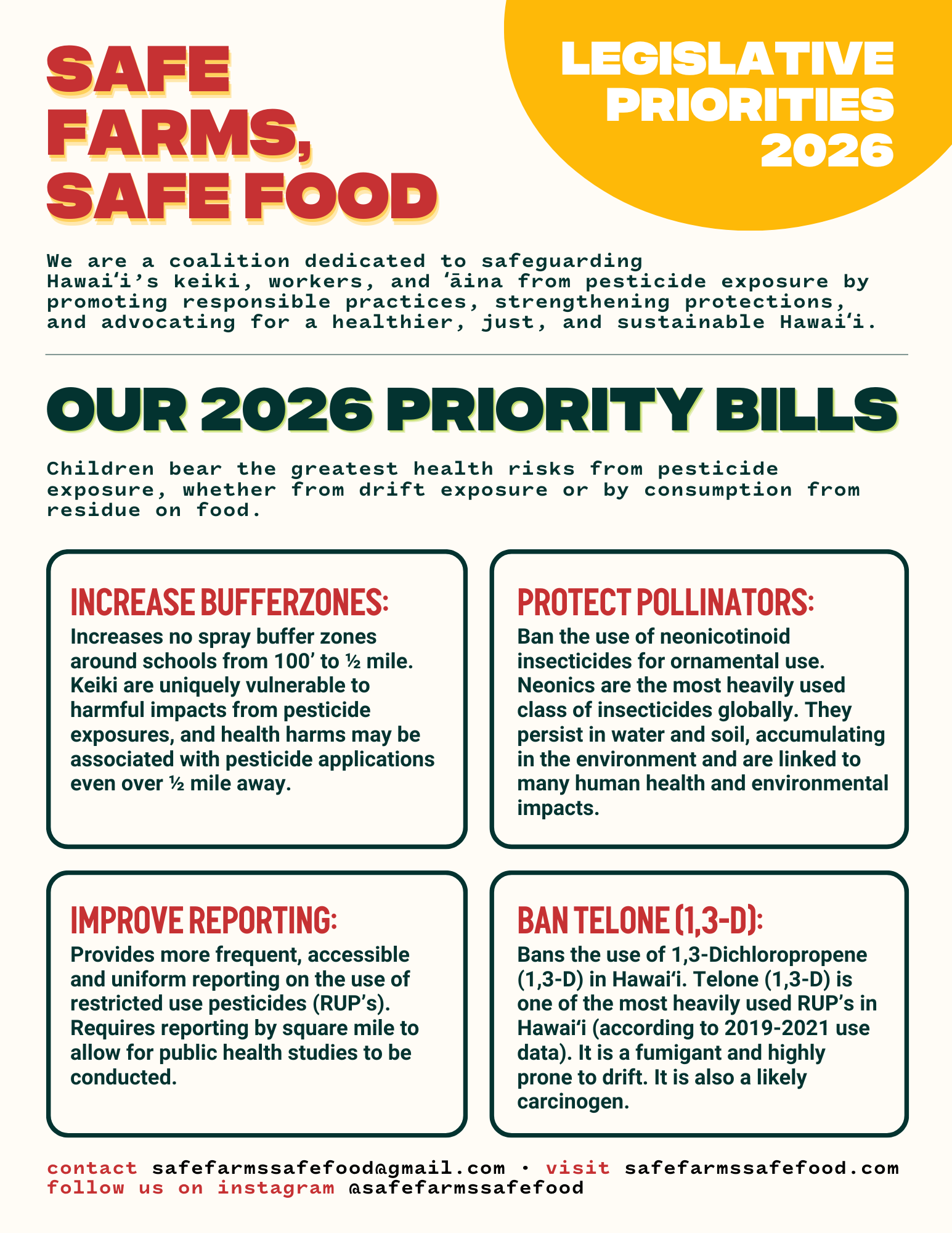
2026 Priority Bills
Why this matters?
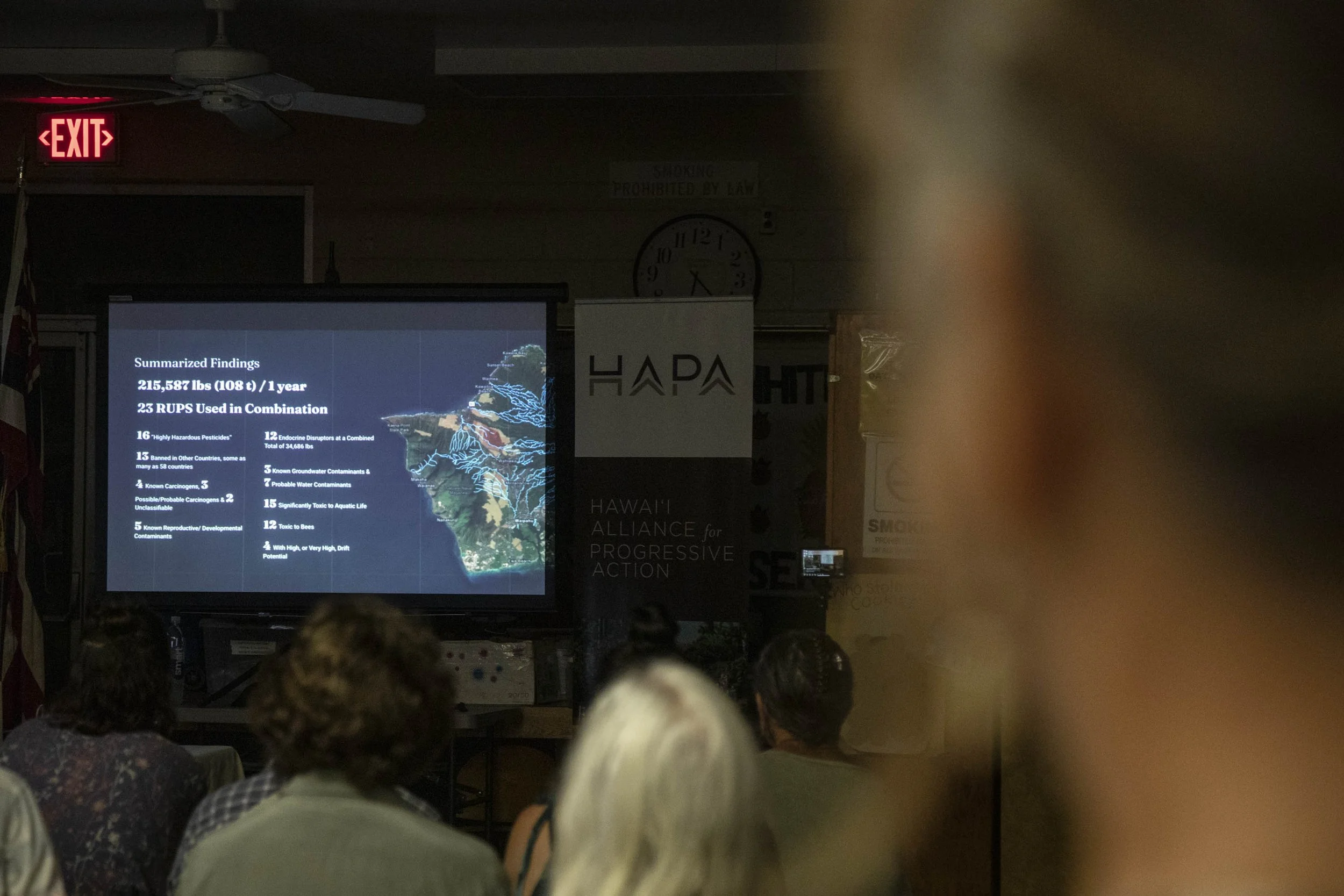
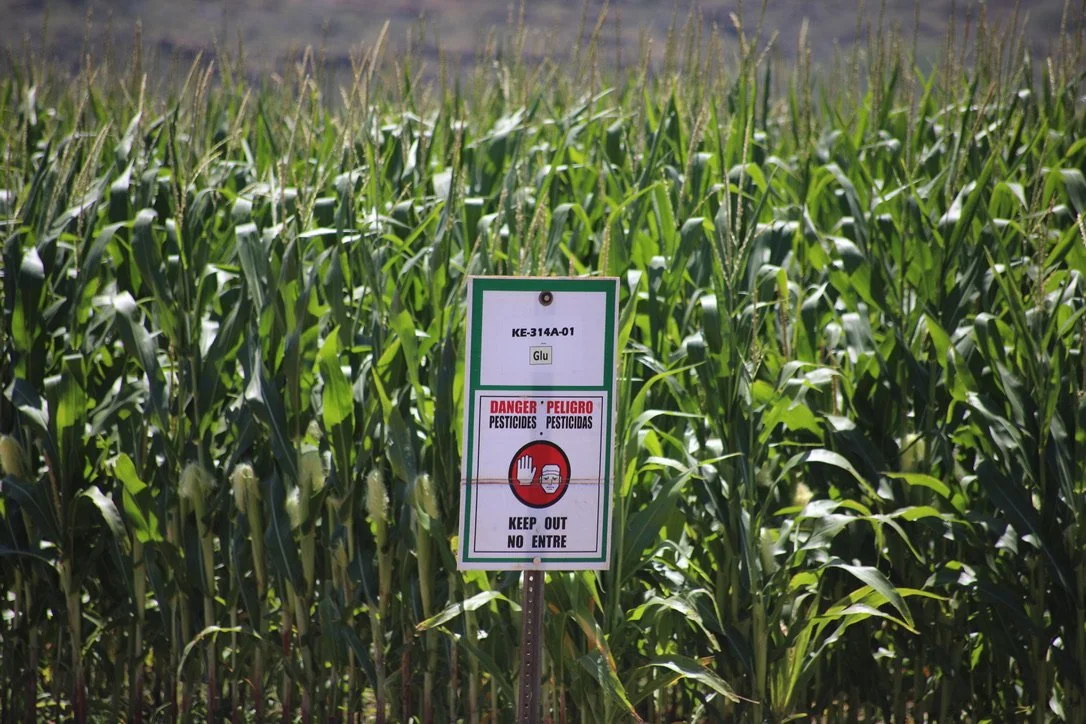
Restricted-use pesticides, RUPs, require a license to use because they pose higher risks to human health and the environment if not handled properly. These chemicals can move beyond the fields where they are applied, entering air, soil, and water.
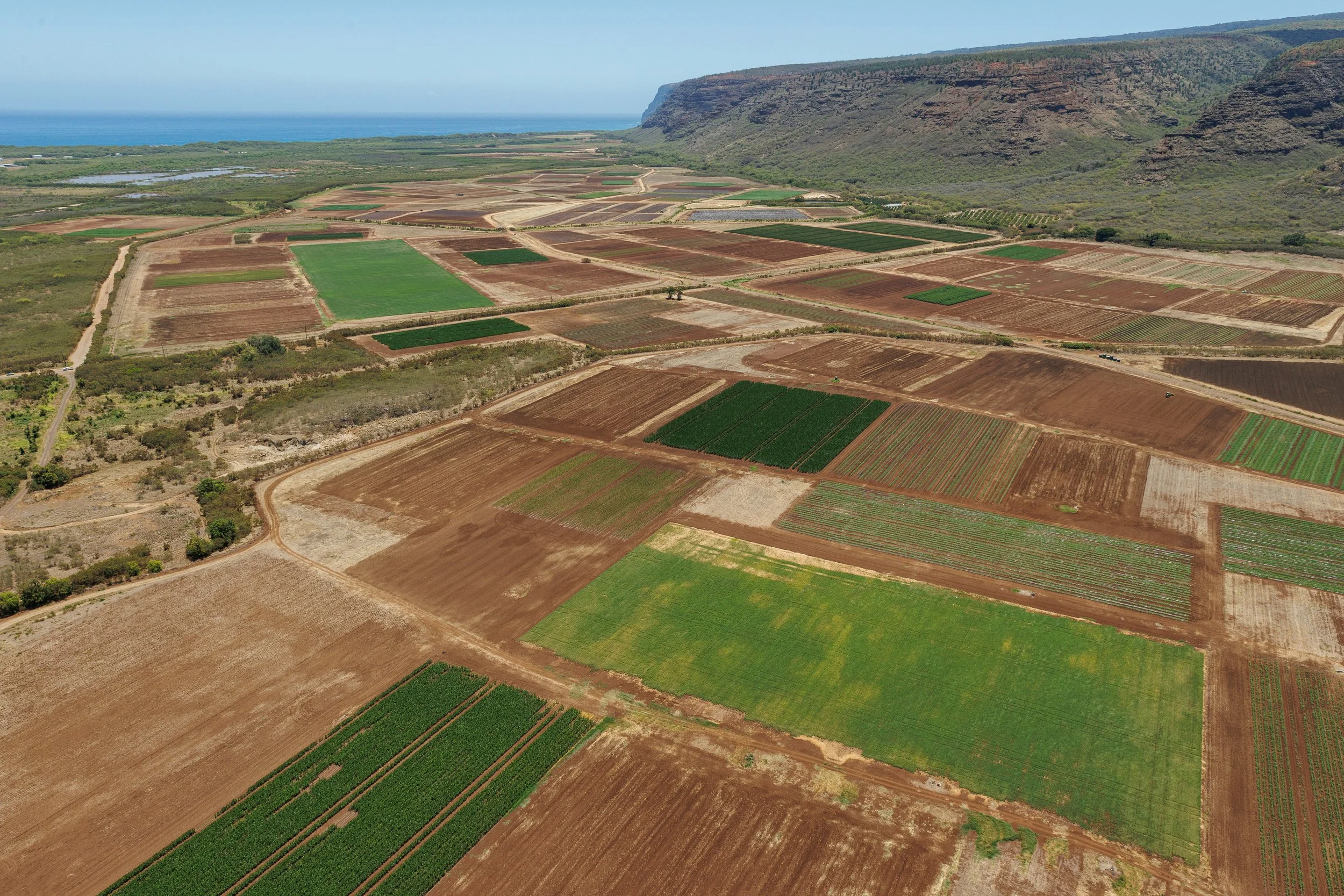
Understanding patterns of use allows the community, researchers, policymakers, and local leaders to better assess potential exposure and to identify areas where additional monitoring, buffers, or stewardship practices may be needed.
Access to data helps build transparency, accountability, and stronger relationships between farming operations and the communities who live nearby.
Our 2026 Legislative Priorities
Increase Buffer Zones
SB352 SD2 (Preferred), SB 2459:
Increases no spray buffer zones around schools from 100’ to ½ mile. Keiki are uniquely vulnerable to harmful impacts from pesticide exposures, and health harms may be associated with pesticide applications even over ½ mile away.
Requires the Department of Agriculture and Biosecurity to use consistent units of measurement in its summary to the public on the amounts of restricted use pesticides applied. Beginning 1/1/2027, establishes a one-half mile buffer zone for pesticides around schools during normal school hours and state and county public parks.
Improve Reporting
Provides more frequent, accessible and uniform reporting on the use of restricted use pesticides (RUP’s). Requires reporting by square mile to allow for public health studies to be conducted.
Requires quarterly rather than annual reporting of all use of restricted use pesticides. Amends the contents of reports to include specific geospatial data and information and increased detail on the amount of restricted use pesticides used. Exempts wood preservative pesticides from reporting requirements. Requires the Department of Agriculture and Biosecurity to develop an online reporting tool for restricted use pesticides.
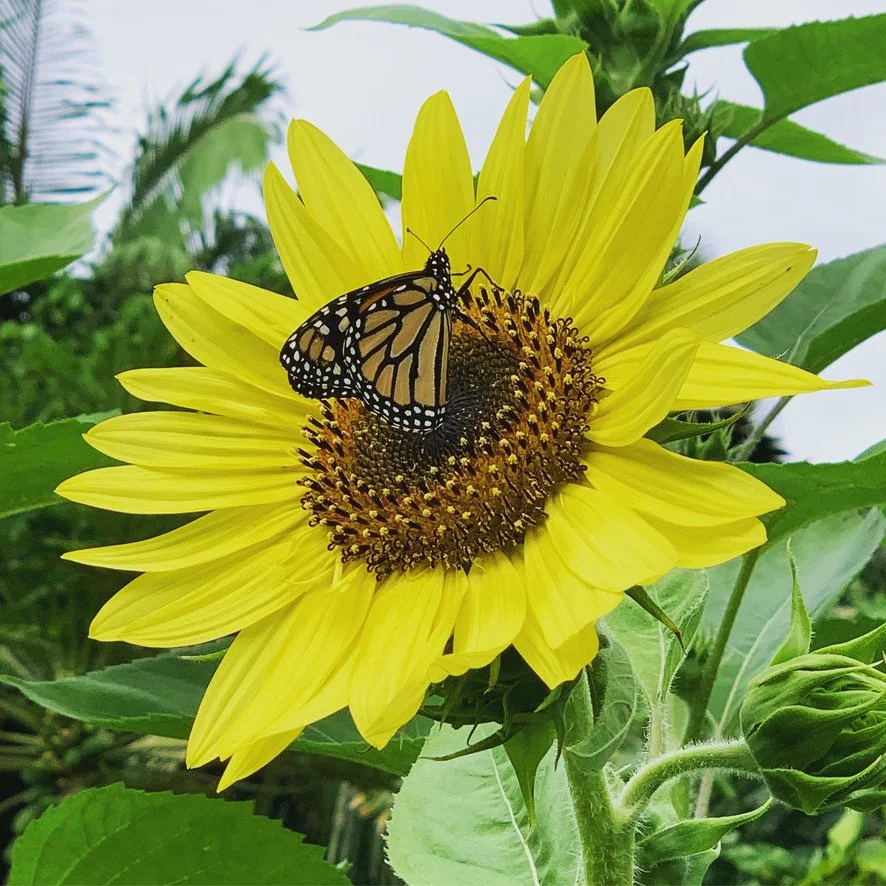
Protect Pollinators
Ban the use of neonicotinoid insecticides for ornamental use. Neonics are the most heavily used class of insecticides globally. They persist in water and soil, accumulating in the environment and are linked to many human health and environmental impacts.
Beginning 1/1/2027, prohibits the sale, possession, or use of a pesticide containing one or more neonicotinoid pesticides, under certain conditions. Requires the Department of Agriculture and Biosecurity to evaluate the potential impacts of and adopt any necessary control measures for neonicotinoid pesticide use on pollinating insects, native migratory and resident birds, aquatic organisms, and human health.
Pesticide Specific
Relating to Pesticides. Bans the use of 1,3-Dichloropropene (1,3-D) in Hawaiʻi. Telone (1,3-D) is one of the most heavily used RUP’s in Hawaiʻi (according to 2019-2021 use data). It is a fumigant and highly prone to drift. It is also a likely carcinogen.
Other
Healthy Soils HB 1621:
Establishes a Conservation Agriculture and Soil Health Incentive Program within the Climate Change Mitigation and Adaptation Commission. Requires an annual report to the Legislature. Appropriates funds.